Friday, 14 June 2013

Dead Formats - a retrospective

Before we start lets get this straight - this article has nothing to do with the Essex based band The Dead Formats... If this isn't what you want to hear then you might as well quit reading now otherwise carry on...

Whilst clearing out a butt load of paper files in the archive room at work (my predecessor was something of a hoarder) I came across something I hadn't seen, or even thought about for a long time... this -
For those of you too young to remember what this is it's NOT a coaster (although it may as well be for all the use it gets for it's intended purpose), it's a 3.5" Floppy disk, this is what fits into that pointless slot on the front of older model PC's... the one called the A drive.  This got me thinking about all those old and disused physical formats, not only for computers but also for music and video...

HD-DVD
Toshiba's contender for the HD video industry was short lived lasting only from 2006 until 2008 when they finally gave up the battle against Sony's Blu-ray format which was always going to win the format war based on 3 things -
  • * Firstly it was the format offering superior storage capacity (50gb maximum against the HD-DVD's 30gb maximum)
  • * Secondly it was the disc format Sony were using for their upcoming PlayStation 3 console
  • * Lastly it was the disc format of choice for the American porn industry which churns out more films per month than Hollywood do in a year
CD-ROM
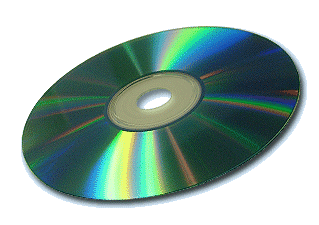
Not really a dead format yet but certainly one that's going the way of the dinosaur.  Up until recently it was the preferred media of choice for pirates everywhere to get their latest 'bangin choons' from their porn riddled PC's in to their ridiculously modified cars so they could cruise down the local high street at five miles an hour with their windows open impressing the 'girls' hanging around outside the local supermarket.  Nowadays they just download it onto their iPod, iPhone, or other MP3 player and plug it in via the AUX port on their overpriced car stereos - this is the only thing that's changed in this scenario.

MINIDISC 
The bastard offspring of the 3.5" Floppy Disc and the CD-ROM the Minidisc felt like it was here one day and gone the next but MD players were still being manufactured up until March 2013.  The Minidisc failed to gain the popularity of the CD and low initial uptake meant many artists weren't releasing their albums in this format and stereos containing Minidisc units remained prohibitively expensive forcing many adopters to hook their MD Walkman up to their stereo in order to record music to listen to.  It's popularity declined further in the late 90's when the first MP3 players appeared and many users began to migrate to digital format instead of hard format.

LASERDISC
The precursor to the modern day DVD, this was a movie on a CD the size of an LP.  The first Laserdiscs were actually made in 1978 and offered superior video quality to VHS and could also handle analog and digital audio whilst VHS was mostly analog only.  Laserdiscs were initially cheaper to manufacture than VHS but by the end of the 1980's the cost of disc pressing was nearly 5 times the cost of VHS due to the amount of plastic and the expensive glass mastering process.  In 1984 Pioneer produced the first commercial Laserdisc player but unfortunately it never took off due to cost and a lack of popularity outside of the US.

VHS / BETAMAX 
Back in the mid 1970's Sony developed the Betamax format which they pitched to the industry as a standard format for the good of everyone.  JVC shocked Sony when they refused to back this format and developed their own rival format known as VHS kicking of the videotape format war of the 80's.  Betamax eventually lost the format war despite offering a superior product due to the perceived benefits of the longer recording times offered by the VHS format and, like the Blu-ray, being chosen as the format of choice by the porn industry.

COMPACT CASSETTE
The compact cassette was originally designed for use with dictaphones but following improvements in sound quality this format eventually replaced 8-Track and Reel-to-Reel tape recording for most domestic applications.  Pre-recorded music cassettes first appeared on the market in the mid 60's and their popularity continued to grow through the 80's with the advent of 'hi-fi' and the Sony Walkman.  In addition to pre-recorded music, cassettes were also used for home recording (with many youngsters using them to record the Top 40 from their radios on a Sunday night in a primitive form of piracy) and for games and data storage on early computers.  Sales of cassette's were over taken by those of CD's in the early 90's and steadily continued to decline dropping from 442 million units sold in 1990 to only 34,000 in 2009.

VINYL (LP & SINGLE)
Introduced in 1948 by Columbia Records the Long Play was adopted as the industry standard for all phonographic recordings and, despite a few minor refinements and a the addition of stereophonic sound capability, has remained the standard format for the last 65 years.  Despite it's decline over recent years there are still labels that release albums on Vinyl for record enthusiasts and for use by DJ's in clubs.

FLOPPY DISKS
Originally developed in the late 60's Floppy disks were originally manufactured as an 8" format then later 5.25" and finally 3.5" formats.  Floppy's became popular in the 80's and 90's to transfer data, store backups, and distribute software for home computers.  By the early 90's increasing software size meant that more and more disks were needed for the distribution of software packages (Beneath a Steel Sky on the Amiga A500 needed 11 disks!!!) and in 1996 it was estimated that there were approximately 5 billion Floppy disks in use worldwide.

iOS7 - a fresh new look for Apple

On June 10th Apple hosted it's Worldwide Developers Conference and used this as an opportunity to reveal some of the most significant changes to it's long standing iOS operating system since it first launched back in 2007.  As well as a host of new features, Jonathan Ive, Apple's Senior Vice President of Industrial Design, revealed that the new update will also bring in a complete overhaul of it's user interface.  Moving away from the glassy effect web 2.0 style icons and ditching the dated green felt, leather, and wood effects that have dominated the bookshelf and games centre features the new design offers a sleeker, flatter interface giving the device the feeling of newness without being a massive departure from the tried and tested formula that's made the iPhone such a dominant market force.  As well as the new icons the interface offers transparent overlays rather than a straight switch between applications, this makes the whole interface seem much sleeker and more modern.  Whether this revamp was a continuation of Steve Jobs vision for Apple and it's products or if it's something that has only been able to be brought to market since Jobs passed is unclear however it's most definitely a welcome change and breathes new life into what was becoming a dated and boring (albeit iconic) interface.

In addition to the new visual style Apple have considered the way that it's customer base use their products and continue their philosophy of investing in the social aspects of their flagship product. Several of the new features enhance this philosophy with Airdrop allowing users to share files from their iPhone with people in the immediate vicinity by utilising the Ad-hoc WiFi  and Bluetooth capabilities of the device without the need to e-mail, text or use 3rd party apps to get a photo or video to someone standing right next to you.  The photo library uses the EXIF data stored in each photo to automatically sort your albums more easily, using this data you can easily find the photos you want without having to go scroll through hundreds of snaps, want to see that photo from when you went to the Grand Canyon 2 years ago? Easy, go into Photos, select the year, the country, the specific location, show the collection off to your friends!

A new Control Centre has been implemented which can be accessed with a simple swipe up from the bottom of the screen (much in the same way that it's Notification Centre can be accessed with a downward swipe in iOS6) and offers quick access to settings such as Airplane Mode, brightness, and media controls as well as shortcuts to several apps like the built in flashlight and compass.

The way open apps are closed has been greatly improved, gone is the requirement for a long key press to get the option to fully close apps running in the background now they can simply be swiped off the screen.  iOS7 learns your habits and utilises it's multitasking ability based on this - check your Facebook every morning at 9am?  iOS learns this and will update your news feeds before you open the app saving you time and effort!

Admittedly some of the new features in iOS7 are just features you would have expected to be there in previous iterations, others seem to be simply 'borrowed' from Android (swipe to close apps, transparent windows, parallax scrolling on the background), and some just seem to be common sense - like displaying a message on the lock screen if you lose your iPhone and requiring your Apple ID and password to turn off the Find my iPhone feature or to erase the iPhone.

Probably the most innovative feature with iOS7 isn't even going to be available until next year and that's 'iOS in the Car' which integrates the iOS with your cars dashboard computer (if the car is equipped with it) and allows you to make calls, send and receive messages, play music, and get directions using the cars in-built display and controls or Siri Eyes Free.

Whilst this update represents a big leap forward for iOS and some of the features seem innovative I can't help but feel that many of the features are simply Apple integrating 3rd Party apps into their OS or taking the best parts of other well known operating systems to integrate into theirs.  Apple are doing well in keeping up with their competitors here but need to come up with something special to define themselves as the market leaders for their products features rather than their style and accessibility.

Full details of the iOS7 features can be found on Apple's website.

Thursday, 13 June 2013

What the future looks like

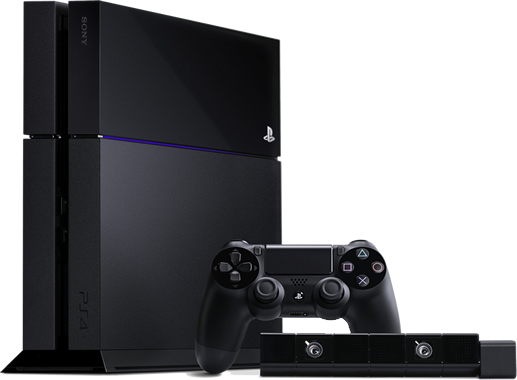
In case you've been living in a cave somewhere and haven't seen the PS4 and Xbox One close up here's a few photo's for you...

PS4


Xbox One


Wednesday, 12 June 2013

The future of gaming

Like many gamers I've found myself watching the announcements of the new generation of consoles with avid curiosity.  Historically I've always been a Playstation fanboy but recently got an Xbox 360 in the sales so I'm approaching this all with an open mind.  Which of the next-gen consoles would I like, which can I afford (the answer is neither if my wife is reading this), and why?

Playstation 4
When Sony announced the PS4 back in February I found myself underwhelmed by the announcement.  With Sony focusing more on the social aspects of the console than the gaming it seemed that I was simply looking at another way to update my Facebook status (and a very expensive one at that).  The controller looked ugly, the console itself didn't even get revealed, and the information on games was pretty much non-existent.

Fast forward 3 months to the first day of E3 and Sony, to be fair, haven't done a bad job of their announcement.  The console is finally revealed, a (slight) throwback to the PS2 days of a menacing looking black obelisk stood below or to the side of your TV.  All sharp corners and hard angles the PS4 blends together old and new styling mixing the glossy piano black of the original launch PS3 with the matt black of the current generation.  Having seen more images of the Dualshock 4 controller from various angles it still looks like it's taken a beating with the ugly stick when viewed face on but it's subtle redesign, textured grip, and the light bar across the front make it seem fresh and new.

The specs for the PS4 have been known for some time already - boasting an 8 core X86-64 AMD processor with an additional Radeon based GPU for graphics processing, 8gb of GDDR5 RAM, a 500gb HDD (upgradeable for those of you who feel that half a Terabyte isn't enough space), and an upgraded Blu-ray Drive the PS4 is the most powerful of the next-gen machines.

The big issue, and the most likely point that will sway gamers one way or the other, is the ability to play second hand games on the console and the restrictions the developers will place on this.  At E3 Sony announced that there will be 'no new restrictions' regarding second hand games meaning you can freely lend them to friends, sell them to another person, trade them in at your local game store, or buy them and play them on your PS4 without any fear that they won't work.  There's no guarantees that Sony won't take this ability away at a later date of course (anyone remember when you could install a 3rd party linux OS on your launch day PS3 if you wanted to?) but for now this is a major selling point.

We all know that both the PS4 and the Xbox One will NOT be backwards compatible out of the box, HOWEVER, Sony sank a not inconsiderable sum ($380 million USD) to acquire the Gaikai cloud based gaming service back in July 2012 with plans to allow for cloud based emulation and streaming of PS1, PS2, and PS3 titles to the Playstation 4 over the internet.  To date Sony are still to officially rule out any form of on-console emulation for older generations so don't throw away your old games just yet.

Xbox One
Microsofts Xbox One reveal in May began to hammer home the fact that this generation of consoles seemed to be less about the games and more about the additional capabilities of the machines. Touting the Xbox One (seriously??? my 7 month old daughter could have come up with a better name than that) as an 'all-in-one entertainment system' Microsoft seem to be forgetting that this is supposed to be a console and are trying to use it to muscle in on the media device market currently dominated by Apple TV and Google TV.  Cable TV users can plug their connection directly into their Xbox One to further integrate the system, but this is no good for those of us who live in Blighty where we don't get Cable TV like the US.

Unlike Sony, Microsoft used their launch event to showcase the console itself, another throw back to the older generations, the device itself looks like a VCR my parents used to have.  It may be boxy and retro in design but it's two tone "liquid black" finish marks it as sleek and modern.  The only tell tale sign that this box is part of your home media system will be that little glowing Xbox logo winking at you from the shadows beneath your TV cabinet.  Silently mocking you for spending an extortionate amount of money on it when you could have bought Apple TV for £99 and got the same effect.  The joypad's had a little tweak in the design, not much to be honest as it didn't really need it, and has Impulse Triggers added in as a nice addition to the ongoing immersion in gaming entertainment.  Impulse Triggers are individual vibrate functions for each of the trigger buttons mounted on the shoulders of the Xbox controller - a nice idea but not a necessity.

Specs wise the Xbox One on paper reads similiar to the PS4 - 8 core X86-64 processor, 8gb of DDR3 RAM (3gb reserved for OS and Apps and 5gb for games), a 500gb (non-replaceable) HDD, and a Blu-Ray drive.  Microsoft claim the choice of the DDR3 RAM was a deliberate choice not to target the high end graphics market and means that the console will be slightly slower than the PS4 but not by so much you'd notice really.

The Xbox One will come shipped with the upgraded Kinect sensor and the console WILL NOT function without the Kinect attached although users can choose to turn off all Kinect functionality whilst keeping the unit attached to the console.  The new Kinect has an upgraded camera for greater accuracy in tracking users and is apparently so accurate it can track your heart beat (which could offer some interesting opportunities for use in the development of survival and horror games like the Resident Evil series).  The microphone on the Kinect will remain in an 'always-on' state so it can accept voice commands, even when the console is in sleep mode.

Microsoft have taken a hard line approach to the second hand market on the Xbox One console stating that it would be down to the game developers to decide if second hand games could be played and any costs incurred in doing so.  When you buy a game it is registered to your Xbox account, you can loan it to a friend but ONLY ONCE and only if that friend has been on your friend list for more than 30 days.  The Xbox One also needs an 'always-on' internet connection as it needs to connect to the Xbox servers every 24 hours for verification, if it can't connect it won't let you play (although you can still watch DVD's and live TV) and, even worse, if you're logged into another console playing your games on the cloud the console will require authentication EVERY HOUR.

Xbox One won't be backwards compatible and, according to sources at Microsoft, it never will be as “Xbox One hardware is not compatible with Xbox 360 games,” ... “We designed Xbox One to play an entirely new generation of games—games that are architected to take full advantage of state-of-the-art processors and the infinite power of the cloud. We care very much about the investment people have made in Xbox 360 and will continue to support it with a pipeline of new games and new apps well into the future"

The Xbox event at E3 was solidly about the games, having got most of the hardware stuff out of the way at the earlier conference, and seems to be where Xbox have the edge.  Offering more launch titles than the PS4 from day one Microsoft seem to be forgetting that the majority of gamers would buy these titles, play them to death, then trade them in for their next game.  Something Microsoft don't seem to be willing to offer it's loyal customer base but Sony will.